

Standing Out from Competitors: Wholesale Distribution ERP

Tiernan O'Connor

Director of Customer Success

Originally published: Aug 28, 2026

Last updated: Aug 28, 2026

Wholesale distribution ERP is a category of business management software that connects a distributor's purchasing, inventory, order management and financial reporting in one system, replacing the mix of accounting software and spreadsheets many distributors run on as they grow. For a wholesale distribution business, this typically means the difference between spending days each month reconciling numbers across systems and having a single, trusted view of the business, which is why NetSuite offers a purpose built NetSuite for Wholesale Distribution edition instead of treating distribution as a generic ERP use case.

Wholesale Trade grew 2.2 % in March 2026, according to the Australian Bureau of Statistics, yet growth alone is not the differentiator distributors might assume it to be. 55 % of distributors have already invested in core systems such as ERP, CRM, ecommerce and analytics without fully integrating them, according to Distribution Strategy Group's 2026 State of Distributor Technology research. That gap, having the systems but not connecting them, is increasingly what separates distributors that stand out from those that do not.

A wholesale distribution ERP needs to do four things well:

  • Consolidate purchasing, inventory and financials into one system
  • Handle customer specific pricing without manual workarounds
  • Produce margin and fulfilment reporting, not just revenue totals
  • Support new sales channels without adding more disconnected tools

Distributors already evaluating NetSuite, or comparing it against a point solution, can see how these requirements map onto the platform directly on the NetSuite Wholesale Distribution Edition page.

The New Wholesale Competitive Landscape

Standing out in wholesale distribution now has less to do with which channels a business sells through and more to do with how well its systems support execution once customers are buying from more places than ever.

D2C Growth Is Eating Into Traditional Wholesale Channels

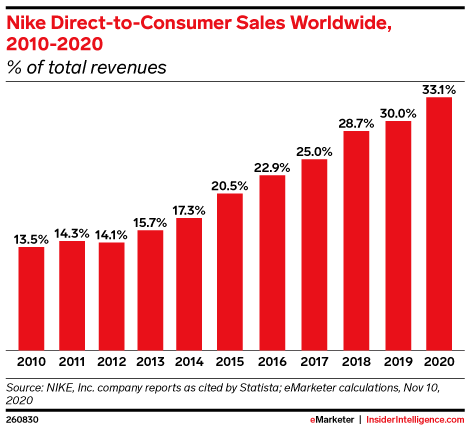
Online retail accounted for 19 % of total retail sales across all markets in 2020, up from 16 % the year before, according to UNCTAD. That shift has only accelerated the direct to consumer trend already squeezing traditional wholesale relationships: Nike's D2C model, for example, grew from 13.5 % to 33.1 % of revenue over 10 years, according to eMarketer.

It hasn't been a one-way shift since. Nike itself has since pulled back, with digital revenue down 12% as the brand rebalances toward wholesale partnerships again, according to 2026 reporting. That swing supports the underlying point better than a straight line would: manufacturers move between D2C and wholesale as conditions change, so a distributor's advantage isn't picking a side, it's having systems flexible enough to handle whichever way a supplier moves next.
How-Wholesalers-Can-Stand-Out-from-Rising-Competition-D2C-Model-Nike

Fulfilment Speed and Accuracy as the Differentiator

Fulfilment has become one of the clearest ways a distributor can differentiate itself once product availability and pricing look similar across competitors. Reducing stock turnaround time through accurate, real time inventory data matters most during demand spikes and peak periods, when the businesses with real time stock visibility already in place handle the surge smoothly and the ones without it scramble to catch up.

DWR's guide to peak season optimisation for wholesale distributors covers this scenario in more depth, including demand forecasting and warehouse optimisation ahead of a seasonal surge.

What to Get Right Before Adding More Sales Channels

Adding a new sales channel, whether that is direct to consumer, marketplace or wholesale key accounts, only helps if the systems behind it can keep up. Two things tend to break first: pricing and reporting.

Personalised Pricing at Scale

Wholesale pricing is rarely one size fits all: different customers negotiate different terms, volume discounts and payment terms, and managing that manually across a growing customer base becomes error prone quickly. An ERP that handles customer specific pricing rules natively means a distributor can add customers and channels without each one becoming a manual pricing exercise.

Reporting Requirements That Actually Match the Business

Generic reporting templates rarely answer the specific questions a distribution business needs answered: gross margin by customer, inventory turns by category, or fulfilment accuracy by channel. Before adding a new channel or customer segment, it is worth confirming the reporting setup can actually answer those questions, not just produce a total revenue figure.

Compliance and Reporting as Distributors Scale

Reporting obligations grow with the business too, not just sales. Multiple entities, warehouses or sales channels each add their own compliance and reconciliation requirements, from GST reporting across states to stock reconciliation for each warehouse location. Distributors handling this manually tend to treat each new requirement as a one-off spreadsheet, which compounds every time the business adds a channel or location. A system that produces consistent, auditable reports on demand removes that compounding cost, since the reporting logic only needs to be built once rather than rebuilt for every new requirement.

Where ERP Implementation Goes Wrong for Distributors

Most ERP implementation problems for distributors trace back to the same root cause: too many disconnected systems held together by manual work, then a rushed attempt to replace all of it at once.

"If you're living in a position where you've got multiple systems and you have to spend a lot of time each month to make stuff happen and get answers, then you're probably living in spreadsheet hell." - Tiernan O'Connor, Director of Customer Success

That's the starting point for most distributors before they move to a proper ERP: multiple systems, manual reconciliation, and no single source of truth. Implementation goes wrong when a business tries to replicate every one of those manual workarounds inside the new system instead of using the move as a chance to simplify.

For a broader look at closing that gap, see DWR's guide to digital transformation for wholesale distributors.

Inventory and Planning Beyond the Basics

Inventory management and warehouse management are large enough topics on their own that they deserve dedicated coverage rather than a summary here. DWR covers NetSuite's inventory management and warehouse management capabilities separately, both directly relevant once a distributor is evaluating ERP options. For the purposes of standing out competitively, the point that matters most is that inventory accuracy directly determines whether the pricing and reporting improvements above are actually trustworthy: a pricing rule or a margin report is only as good as the stock data feeding it.

Client Proof: Espresso Displays

Espresso Displays, an Australian manufacturer of extendable USB-C powered LCD displays that drop ships globally, was previously running seven to eight separate Xero files and seven to eight separate Shopify accounts, one for each market it sold into. Consolidating onto NetSuite unified every entity and storefront in one system, and the business tripled its revenue without increasing headcount, eventually building enough in-house NetSuite capability to become largely self-sufficient.

That outcome is a direct answer to the channel and pricing problems covered above: the fix was not adding more systems to handle more channels, it was consolidating onto one that could handle all of them.

What to Look for in Wholesale Distribution ERP Software

For distributors specifically evaluating a NetSuite fit for wholesale distribution, or looking for ERP software for distributors here in Australia rather than a generic global list, a few criteria matter more than a feature checklist:

  • Customer specific pricing. Whether pricing rules can be configured per customer without custom development.
  • Margin and fulfilment reporting. Whether reporting can be built around margin and fulfilment metrics rather than just revenue.
  • Genuine distribution experience. Whether the vendor and implementation partner have direct experience with distribution businesses specifically, rather than generic ERP experience.

Standing Out Means Fixing the Systems Behind the Channels

Standing out in wholesale distribution has less to do with the number of channels a distributor sells through and more to do with whether the systems behind those channels can keep pricing, inventory and reporting accurate as the business grows. Getting pricing and reporting right before adding channels, and choosing an ERP with genuine distribution experience behind it, tends to matter more than any single feature.

If you are evaluating wholesale distribution ERP software and want an honest read on whether your current systems can support where the business is headed, book a free NetSuite consultation to talk through your specific channels and reporting requirements.

Pricing information is based on publicly available data and industry knowledge as of August 2026. Actual costs vary based on business size, complexity, implementation scope, and specific requirements. Contact vendors directly for customised quotes.

FAQs

What is wholesale distribution ERP?
Do I need distributor-specific ERP software, or will a generic ERP work?
What does ERP software for distributors cost in Australia?
How are growing distributors using wholesale distribution software to handle compliance and reporting requirements?

Need Expert Guidance?

Our NetSuite consultants are here to help you make the right decision for your business.

1800 197 403

info@dwr.com.au

Schedule Consultation

Trusted by 200+ Australian BUsinesses

NetSuite Implementation

System Optimisation

Project Recovery

Ongoing Support

Wholesale distribution ERP is a category of business management software that connects a distributor's purchasing, inventory, order management and financial reporting in one system, replacing the mix of accounting software and spreadsheets many distributors run on as they grow. For a wholesale distribution business, this typically means the difference between spending days each month reconciling numbers across systems and having a single, trusted view of the business, which is why NetSuite offers a purpose built NetSuite for Wholesale Distribution edition instead of treating distribution as a generic ERP use case.

Wholesale Trade grew 2.2 % in March 2026, according to the Australian Bureau of Statistics, yet growth alone is not the differentiator distributors might assume it to be. 55 % of distributors have already invested in core systems such as ERP, CRM, ecommerce and analytics without fully integrating them, according to Distribution Strategy Group's 2026 State of Distributor Technology research. That gap, having the systems but not connecting them, is increasingly what separates distributors that stand out from those that do not.

A wholesale distribution ERP needs to do four things well:

  • Consolidate purchasing, inventory and financials into one system
  • Handle customer specific pricing without manual workarounds
  • Produce margin and fulfilment reporting, not just revenue totals
  • Support new sales channels without adding more disconnected tools

Distributors already evaluating NetSuite, or comparing it against a point solution, can see how these requirements map onto the platform directly on the NetSuite Wholesale Distribution Edition page.

The New Wholesale Competitive Landscape

Standing out in wholesale distribution now has less to do with which channels a business sells through and more to do with how well its systems support execution once customers are buying from more places than ever.

D2C Growth Is Eating Into Traditional Wholesale Channels

Online retail accounted for 19 % of total retail sales across all markets in 2020, up from 16 % the year before, according to UNCTAD. That shift has only accelerated the direct to consumer trend already squeezing traditional wholesale relationships: Nike's D2C model, for example, grew from 13.5 % to 33.1 % of revenue over 10 years, according to eMarketer.

It hasn't been a one-way shift since. Nike itself has since pulled back, with digital revenue down 12% as the brand rebalances toward wholesale partnerships again, according to 2026 reporting. That swing supports the underlying point better than a straight line would: manufacturers move between D2C and wholesale as conditions change, so a distributor's advantage isn't picking a side, it's having systems flexible enough to handle whichever way a supplier moves next.

How-Wholesalers-Can-Stand-Out-from-Rising-Competition-D2C-Model-Nike

Fulfilment Speed and Accuracy as the Differentiator

Fulfilment has become one of the clearest ways a distributor can differentiate itself once product availability and pricing look similar across competitors. Reducing stock turnaround time through accurate, real time inventory data matters most during demand spikes and peak periods, when the businesses with real time stock visibility already in place handle the surge smoothly and the ones without it scramble to catch up.

DWR's guide to peak season optimisation for wholesale distributors covers this scenario in more depth, including demand forecasting and warehouse optimisation ahead of a seasonal surge.

What to Get Right Before Adding More Sales Channels

Adding a new sales channel, whether that is direct to consumer, marketplace or wholesale key accounts, only helps if the systems behind it can keep up. Two things tend to break first: pricing and reporting.

Personalised Pricing at Scale

Wholesale pricing is rarely one size fits all: different customers negotiate different terms, volume discounts and payment terms, and managing that manually across a growing customer base becomes error prone quickly. An ERP that handles customer specific pricing rules natively means a distributor can add customers and channels without each one becoming a manual pricing exercise.

Reporting Requirements That Actually Match the Business

Generic reporting templates rarely answer the specific questions a distribution business needs answered: gross margin by customer, inventory turns by category, or fulfilment accuracy by channel. Before adding a new channel or customer segment, it is worth confirming the reporting setup can actually answer those questions, not just produce a total revenue figure.

Compliance and Reporting as Distributors Scale

Reporting obligations grow with the business too, not just sales. Multiple entities, warehouses or sales channels each add their own compliance and reconciliation requirements, from GST reporting across states to stock reconciliation for each warehouse location. Distributors handling this manually tend to treat each new requirement as a one-off spreadsheet, which compounds every time the business adds a channel or location. A system that produces consistent, auditable reports on demand removes that compounding cost, since the reporting logic only needs to be built once rather than rebuilt for every new requirement.

Where ERP Implementation Goes Wrong for Distributors

Most ERP implementation problems for distributors trace back to the same root cause: too many disconnected systems held together by manual work, then a rushed attempt to replace all of it at once.

"If you're living in a position where you've got multiple systems and you have to spend a lot of time each month to make stuff happen and get answers, then you're probably living in spreadsheet hell." - Tiernan O'Connor, Director of Customer Success

That's the starting point for most distributors before they move to a proper ERP: multiple systems, manual reconciliation, and no single source of truth. Implementation goes wrong when a business tries to replicate every one of those manual workarounds inside the new system instead of using the move as a chance to simplify.

For a broader look at closing that gap, see DWR's guide to digital transformation for wholesale distributors.

Inventory and Planning Beyond the Basics

Inventory management and warehouse management are large enough topics on their own that they deserve dedicated coverage rather than a summary here. DWR covers NetSuite's inventory management and warehouse management capabilities separately, both directly relevant once a distributor is evaluating ERP options. For the purposes of standing out competitively, the point that matters most is that inventory accuracy directly determines whether the pricing and reporting improvements above are actually trustworthy: a pricing rule or a margin report is only as good as the stock data feeding it.

Client Proof: Espresso Displays

Espresso Displays, an Australian manufacturer of extendable USB-C powered LCD displays that drop ships globally, was previously running seven to eight separate Xero files and seven to eight separate Shopify accounts, one for each market it sold into. Consolidating onto NetSuite unified every entity and storefront in one system, and the business tripled its revenue without increasing headcount, eventually building enough in-house NetSuite capability to become largely self-sufficient.

That outcome is a direct answer to the channel and pricing problems covered above: the fix was not adding more systems to handle more channels, it was consolidating onto one that could handle all of them.

What to Look for in Wholesale Distribution ERP Software

For distributors specifically evaluating a NetSuite fit for wholesale distribution, or looking for ERP software for distributors here in Australia rather than a generic global list, a few criteria matter more than a feature checklist:

  • Customer specific pricing. Whether pricing rules can be configured per customer without custom development.
  • Margin and fulfilment reporting. Whether reporting can be built around margin and fulfilment metrics rather than just revenue.
  • Genuine distribution experience. Whether the vendor and implementation partner have direct experience with distribution businesses specifically, rather than generic ERP experience.

Standing Out Means Fixing the Systems Behind the Channels

Standing out in wholesale distribution has less to do with the number of channels a distributor sells through and more to do with whether the systems behind those channels can keep pricing, inventory and reporting accurate as the business grows. Getting pricing and reporting right before adding channels, and choosing an ERP with genuine distribution experience behind it, tends to matter more than any single feature.

If you are evaluating wholesale distribution ERP software and want an honest read on whether your current systems can support where the business is headed, book a free NetSuite consultation to talk through your specific channels and reporting requirements.

Pricing information is based on publicly available data and industry knowledge as of August 2026. Actual costs vary based on business size, complexity, implementation scope, and specific requirements. Contact vendors directly for customised quotes.

Download the Ultimate Buyers Guide to NetSuite ERP

Navigating the diverse landscape of ERP software solutions can be daunting. With the NetSuite Buyer's Guide, you'll gain access to insider knowledge that empowers you to make the best decisions for your company.

Download the Guide