

Achieving Supply Chain Excellence with NetSuite ERP: 2026 Guide

Pyramid of building blocks representing supply chain stages, with icons for transport, logistics and freight

Tiernan O'Connor

Director of Customer Success

Originally published: Sep 21, 2026

Last updated: Sep 21, 2026

NetSuite ERP for supply chain management is a cloud based platform that unifies inventory, procurement, order fulfilment, and financials into one system, replacing the disconnected tools most businesses use to try to track their supply chain instead. That gap matters more than most businesses realise: Australian companies are, by some distance, the least prepared in the world to absorb a major supply chain shock, and the businesses closing that gap are doing it through visibility, not luck.

This guide covers:

  • What NetSuite ERP actually solves for supply chain visibility, not just a feature list
  • Why Australian businesses specifically are exposed right now
  • How to reduce implementation risk when moving to a unified system
  • How V2 Food used NetSuite to fix its own supply chain visibility gaps

What NetSuite ERP Actually Solves for Supply Chain Visibility

The core supply chain problem NetSuite addresses isn't any single function, it's fragmentation. Most businesses run inventory, procurement, order management, and finance as separate systems that don't share data in real time, which means nobody in the business has an accurate, current picture of the supply chain at any given moment.

A NetSuite implementation partner typically sees this show up in a few consistent ways: procurement decisions made without visibility into current inventory position, fulfilment delays that finance doesn't hear about until a customer complains, and demand forecasts built on stale data because nobody wants to manually reconcile three different systems before making a call. NetSuite's procurement and inventory capabilities sit inside the same platform as financials specifically to close that gap, not as separate modules bolted together.

Why Australian Businesses Are Especially Exposed

Australian businesses are the least prepared of any country surveyed to withstand a major supply chain disruption. Proxima's 2026 Global Supply Chain Resilience Outlook, based on research with 500+ CEOs across Australia, the UK, US, Singapore, and Germany, found that just 5% of Australian businesses could sustain operations for four to six months during a major disruption, the lowest figure of any market surveyed. 59% of Australian businesses would be unable to maintain operations beyond three weeks, and 21% said they could only survive one to two weeks.

That vulnerability isn't random. Geographic isolation, long-haul supply routes, and extended lead times mean Australian businesses carry more exposure to disruption than businesses in most other markets, with less margin for error when something goes wrong. A business that doesn't have real-time visibility into its own inventory, suppliers, and fulfillment status is starting from a weaker position before a shock even happens.

This is precisely the gap unified ERP systems are built to close. Real-time visibility doesn't prevent a disruption, but it's the difference between spotting a supply problem early enough to act and finding out about it once it's already affected customers.

Reducing Implementation Risk

Moving to a unified system is itself a project with real risk if it's handled poorly, and the businesses that get the least value from an ERP investment are usually the ones that treat implementation as a purely technical exercise rather than a change management one. Training and genuine user adoption matter as much as the software configuration itself, since a system nobody uses properly delivers none of the visibility it was implemented to provide.

Choosing the right implementation partner matters more here than most businesses expect going in.

"I'd recommend working through the partner ecosystem for any software product. Generally, the partners have the more experienced consultants." - Tiernan O'Connor, Director of Customer Success

The sales process for any ERP platform tends to involve a different set of people than the ones who actually deliver the implementation, which makes it worth evaluating a partner specifically on their implementation track record and consultant experience, not just the platform's feature set.

V2 Food: Supply Chain Visibility in Practice

V2 Food, a leader in plant-based food manufacturing, faced growing challenges with inventory, production scheduling, and supplier collaboration as demand for its products increased. Manual processes that worked at a smaller scale started creating real friction as the business grew.

Moving to NetSuite gave V2 Food improved forecasting that reduced raw material waste, better collaboration with plant-based ingredient suppliers, more accurate production scheduling to keep pace with demand, and real-time visibility into inventory that supported faster decision-making. The business's sustainability goals also benefited directly from a supply chain it could actually see and manage, rather than one it was reacting to after the fact.

Getting Started

Supply chain excellence isn't a single feature or a one-off project, it's the result of having real-time visibility across inventory, procurement, fulfilment, and finance instead of piecing that picture together after the fact. For Australian businesses specifically, that visibility matters more than it does almost anywhere else in the world, given how exposed local supply chains already are to disruption.

Based on our experience with 250+ implementations, the businesses that get the most from a unified ERP system treat the implementation itself, including training and change management, as seriously as the platform choice.

If your supply chain visibility still depends on reconciling separate systems by hand, book a free NetSuite consultation to talk through what a unified view would actually look like for your business.

FAQs

What role does ERP play in supply chain management?
How exposed are Australian businesses to supply chain disruption?
What's the biggest risk when implementing an ERP system for supply chain management?
Can NetSuite manage procurement and supplier relationships as well as inventory?

Need Expert Guidance?

Our NetSuite consultants are here to help you make the right decision for your business.

1800 197 403

info@dwr.com.au

Schedule Consultation

Trusted by 200+ Australian BUsinesses

NetSuite Implementation

System Optimisation

Project Recovery

Ongoing Support

NetSuite ERP for supply chain management is a cloud based platform that unifies inventory, procurement, order fulfilment, and financials into one system, replacing the disconnected tools most businesses use to try to track their supply chain instead. That gap matters more than most businesses realise: Australian companies are, by some distance, the least prepared in the world to absorb a major supply chain shock, and the businesses closing that gap are doing it through visibility, not luck.

This guide covers:

  • What NetSuite ERP actually solves for supply chain visibility, not just a feature list
  • Why Australian businesses specifically are exposed right now
  • How to reduce implementation risk when moving to a unified system
  • How V2 Food used NetSuite to fix its own supply chain visibility gaps

What NetSuite ERP Actually Solves for Supply Chain Visibility

The core supply chain problem NetSuite addresses isn't any single function, it's fragmentation. Most businesses run inventory, procurement, order management, and finance as separate systems that don't share data in real time, which means nobody in the business has an accurate, current picture of the supply chain at any given moment.

A NetSuite implementation partner typically sees this show up in a few consistent ways: procurement decisions made without visibility into current inventory position, fulfilment delays that finance doesn't hear about until a customer complains, and demand forecasts built on stale data because nobody wants to manually reconcile three different systems before making a call. NetSuite's procurement and inventory capabilities sit inside the same platform as financials specifically to close that gap, not as separate modules bolted together.

Why Australian Businesses Are Especially Exposed

Australian businesses are the least prepared of any country surveyed to withstand a major supply chain disruption. Proxima's 2026 Global Supply Chain Resilience Outlook, based on research with 500+ CEOs across Australia, the UK, US, Singapore, and Germany, found that just 5% of Australian businesses could sustain operations for four to six months during a major disruption, the lowest figure of any market surveyed. 59% of Australian businesses would be unable to maintain operations beyond three weeks, and 21% said they could only survive one to two weeks.

That vulnerability isn't random. Geographic isolation, long-haul supply routes, and extended lead times mean Australian businesses carry more exposure to disruption than businesses in most other markets, with less margin for error when something goes wrong. A business that doesn't have real-time visibility into its own inventory, suppliers, and fulfillment status is starting from a weaker position before a shock even happens.

This is precisely the gap unified ERP systems are built to close. Real-time visibility doesn't prevent a disruption, but it's the difference between spotting a supply problem early enough to act and finding out about it once it's already affected customers.

Reducing Implementation Risk

Moving to a unified system is itself a project with real risk if it's handled poorly, and the businesses that get the least value from an ERP investment are usually the ones that treat implementation as a purely technical exercise rather than a change management one. Training and genuine user adoption matter as much as the software configuration itself, since a system nobody uses properly delivers none of the visibility it was implemented to provide.

Choosing the right implementation partner matters more here than most businesses expect going in.

"I'd recommend working through the partner ecosystem for any software product. Generally, the partners have the more experienced consultants." - Tiernan O'Connor, Director of Customer Success

The sales process for any ERP platform tends to involve a different set of people than the ones who actually deliver the implementation, which makes it worth evaluating a partner specifically on their implementation track record and consultant experience, not just the platform's feature set.

V2 Food: Supply Chain Visibility in Practice

V2 Food, a leader in plant-based food manufacturing, faced growing challenges with inventory, production scheduling, and supplier collaboration as demand for its products increased. Manual processes that worked at a smaller scale started creating real friction as the business grew.

Moving to NetSuite gave V2 Food improved forecasting that reduced raw material waste, better collaboration with plant-based ingredient suppliers, more accurate production scheduling to keep pace with demand, and real-time visibility into inventory that supported faster decision-making. The business's sustainability goals also benefited directly from a supply chain it could actually see and manage, rather than one it was reacting to after the fact.

Getting Started

Supply chain excellence isn't a single feature or a one-off project, it's the result of having real-time visibility across inventory, procurement, fulfilment, and finance instead of piecing that picture together after the fact. For Australian businesses specifically, that visibility matters more than it does almost anywhere else in the world, given how exposed local supply chains already are to disruption.

Based on our experience with 250+ implementations, the businesses that get the most from a unified ERP system treat the implementation itself, including training and change management, as seriously as the platform choice.

If your supply chain visibility still depends on reconciling separate systems by hand, book a free NetSuite consultation to talk through what a unified view would actually look like for your business.

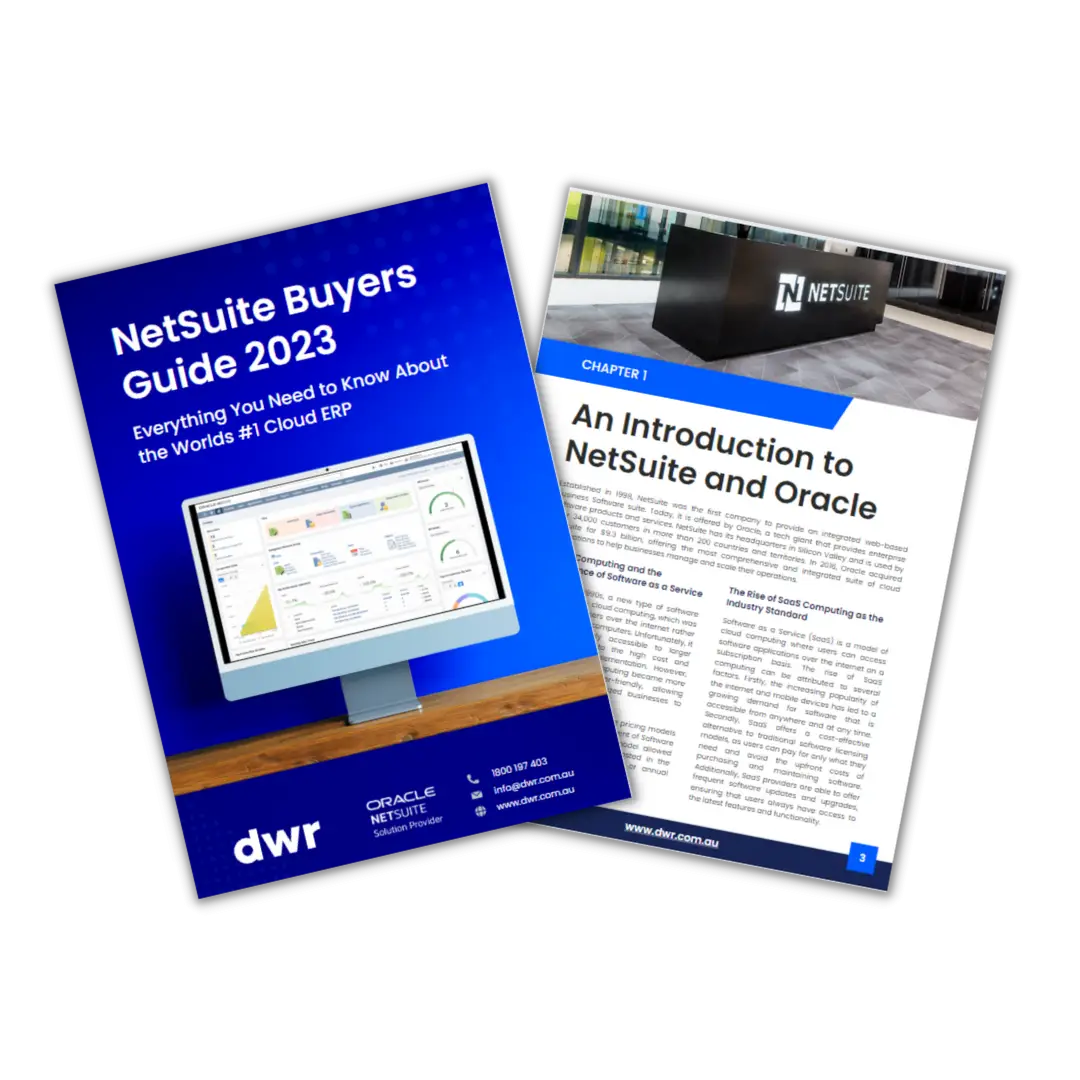
Download the Ultimate Buyers Guide to NetSuite ERP

Navigating the diverse landscape of ERP software solutions can be daunting. With the NetSuite Buyer's Guide, you'll gain access to insider knowledge that empowers you to make the best decisions for your company.

Download the Guide