

NetSuite Warehouse Management: 2026 Guide to Optimising Operations

Two warehouse staff members viewing warehouse operations from an elevated vantage point, pointing out stock areas below

Tiernan O'Connor

Director of Customer Success

Originally published: Sep 16, 2026

Last updated: Sep 16, 2026

NetSuite warehouse management is a cloud-based capability that gives warehouse teams real-time visibility into stock, orders, and fulfilment status across one platform, replacing the manual tracking and disconnected systems that slow most warehouse operations down. For businesses running multiple locations or scaling order volume quickly, the gap between a warehouse that runs on real-time data and one that runs on end-of-day spreadsheet updates becomes the difference between fulfilling orders on time and consistently playing catch-up.

"There's time being wasted in their business. Systems are either really old and just don't have any modern functionality, or they're using multiple systems that don't talk to each other. There's a lot of effort to hobble the information together so they can get the reporting they need." - Tiernan O'Connor, Director of Customer Success

That pattern shows up constantly in warehouse operations specifically: a WMS that doesn't talk to the finance system, a stock count that's accurate in one place and wrong in another. Working with a NetSuite implementation partner to consolidate these into one system is usually where the actual efficiency gain comes from, not from any single feature in isolation.

This guide covers:

  • Real-time inventory tracking and the visibility gap it closes
  • Warehouse layout, automation, and stock control fundamentals
  • How to prepare for peak season without defaulting to reactive decisions
  • How Fertile Mind used NetSuite to fix its own warehouse processes

Real-Time Inventory Tracking and Warehouse Visibility

The core problem NetSuite's warehouse management system solves is simple to state and expensive to ignore: most warehouses don't actually know their stock position in real time, they know what it was as of the last manual count or system sync. NetSuite closes that gap by tracking stock movement, from goods receipt through pick, pack, and ship, as it happens, rather than reconstructing it after the fact.

This matters most at the point where warehouse activity and financial reporting need to agree. A stock movement that updates the warehouse system but not the general ledger for another week creates exactly the kind of reconciliation work that eats a finance team's time without adding value anywhere.

Warehouse Layout, Automation, and Stock Control

Getting warehouse layout and stock control right is largely about matching your system's capability to how your warehouse actually operates, not adopting every available feature. NetSuite's advanced inventory management capability supports bin-level tracking, serialised inventory, and multi-location transfers, which matters specifically once a warehouse has outgrown simple shelf-and-aisle tracking.

A few practical signals that a business has reached that point:

  • Staff spend meaningful time physically searching for stock rather than the system directing them straight to it
  • Serial or lot-specific items (anything requiring traceability) are tracked manually alongside the main system, not inside it
  • Warehouse floorplan changes require a manual remapping exercise rather than a system update

None of this requires automating the entire warehouse at once. The businesses that get this right tend to fix the specific bottleneck causing the most friction first, whether that's stock location accuracy or lot traceability, rather than treating "warehouse automation" as one all-or-nothing project.

Preparing for Peak Season Without Reactive Firefighting

Most peak season planning fails for a predictable reason: businesses plan earlier but still end up making reactive decisions once volume actually surges. The Kase 2026 Peak Season Retailer Sentiment report found:

  • 93% of retail and fulfilment leaders expect demand to rise this year
  • 93% say inventory and operations visibility is mission-critical
  • 79% still expect to make reactive decisions once order volumes actually surge

Planning earlier hasn't solved the underlying problem, because the problem usually isn't timing, it's visibility. Even leaders who call visibility mission-critical aren't confident they actually have it, which is why reactive decision-making stays this high regardless of how far in advance planning starts.

A warehouse running on NetSuite has an advantage here that's easy to overlook: demand forecasting and stock positioning are based on the same live data the rest of the business is using, not a separate peak season spreadsheet exercise rebuilt from scratch every year. That's a meaningfully different starting point than trying to forecast peak demand from historical exports pulled a month in advance.

This pressure isn't unique to any one industry either. The Australian Bureau of Statistics' industry productivity data shows labour productivity fell 2.9% in 2024-25, a decline tied in part to reduced investment in warehouse and office infrastructure. Businesses that keep deferring investment in real-time systems are the ones least equipped to absorb a demand spike without adding headcount just to manage the chaos.

Fertile Mind: Warehouse Processes in Practice

Fertile Mind, a manufacturer and distributor of maternity wear and baby products, needed warehouse and inventory processes that could keep pace with growth without the business outgrowing its own systems every year. The business replaced MYOB with NetSuite's Retail Edition to get there.

System MYOB NetSuite Retail Edition
Decision-making Slower, based on stale data Faster, based on real-time information
Fulfilment Prone to bottlenecks Flowing smoothly
Productivity Constrained by manual processes Lifted across the warehouse

Getting Started

Warehouse management problems rarely come from a single missing feature. They come from systems that don't talk to each other, stock data that's accurate in one place and wrong in another, and peak season planning built on last year's spreadsheet rather than this year's actual demand signals.

Based on our experience with 250+ implementations, the businesses that get the most out of NetSuite's warehouse management capability are the ones that fix their highest-friction bottleneck first, whether that's stock visibility, layout, or peak season readiness, rather than trying to solve everything in one project.

If your warehouse operations are still running on disconnected systems or manual reconciliation, book a free NetSuite consultation to talk through where the biggest gains would actually come from.

FAQs

How does NetSuite improve warehouse management?
What's the best way to prepare a warehouse for peak season?
Does NetSuite support advanced stock control like bin and serialised inventory tracking?
How long does it take to implement NetSuite's warehouse management system?

Need Expert Guidance?

Our NetSuite consultants are here to help you make the right decision for your business.

1800 197 403

info@dwr.com.au

Schedule Consultation

Trusted by 200+ Australian BUsinesses

NetSuite Implementation

System Optimisation

Project Recovery

Ongoing Support

NetSuite warehouse management is a cloud-based capability that gives warehouse teams real-time visibility into stock, orders, and fulfilment status across one platform, replacing the manual tracking and disconnected systems that slow most warehouse operations down. For businesses running multiple locations or scaling order volume quickly, the gap between a warehouse that runs on real-time data and one that runs on end-of-day spreadsheet updates becomes the difference between fulfilling orders on time and consistently playing catch-up.

"There's time being wasted in their business. Systems are either really old and just don't have any modern functionality, or they're using multiple systems that don't talk to each other. There's a lot of effort to hobble the information together so they can get the reporting they need." - Tiernan O'Connor, Director of Customer Success

That pattern shows up constantly in warehouse operations specifically: a WMS that doesn't talk to the finance system, a stock count that's accurate in one place and wrong in another. Working with a NetSuite implementation partner to consolidate these into one system is usually where the actual efficiency gain comes from, not from any single feature in isolation.

This guide covers:

  • Real-time inventory tracking and the visibility gap it closes
  • Warehouse layout, automation, and stock control fundamentals
  • How to prepare for peak season without defaulting to reactive decisions
  • How Fertile Mind used NetSuite to fix its own warehouse processes

Real-Time Inventory Tracking and Warehouse Visibility

The core problem NetSuite's warehouse management system solves is simple to state and expensive to ignore: most warehouses don't actually know their stock position in real time, they know what it was as of the last manual count or system sync. NetSuite closes that gap by tracking stock movement, from goods receipt through pick, pack, and ship, as it happens, rather than reconstructing it after the fact.

This matters most at the point where warehouse activity and financial reporting need to agree. A stock movement that updates the warehouse system but not the general ledger for another week creates exactly the kind of reconciliation work that eats a finance team's time without adding value anywhere.

Warehouse Layout, Automation, and Stock Control

Getting warehouse layout and stock control right is largely about matching your system's capability to how your warehouse actually operates, not adopting every available feature. NetSuite's advanced inventory management capability supports bin-level tracking, serialised inventory, and multi-location transfers, which matters specifically once a warehouse has outgrown simple shelf-and-aisle tracking.

A few practical signals that a business has reached that point:

  • Staff spend meaningful time physically searching for stock rather than the system directing them straight to it
  • Serial or lot-specific items (anything requiring traceability) are tracked manually alongside the main system, not inside it
  • Warehouse floorplan changes require a manual remapping exercise rather than a system update

None of this requires automating the entire warehouse at once. The businesses that get this right tend to fix the specific bottleneck causing the most friction first, whether that's stock location accuracy or lot traceability, rather than treating "warehouse automation" as one all-or-nothing project.

Preparing for Peak Season Without Reactive Firefighting

Most peak season planning fails for a predictable reason: businesses plan earlier but still end up making reactive decisions once volume actually surges. The Kase 2026 Peak Season Retailer Sentiment report found:

  • 93% of retail and fulfilment leaders expect demand to rise this year
  • 93% say inventory and operations visibility is mission-critical
  • 79% still expect to make reactive decisions once order volumes actually surge

Planning earlier hasn't solved the underlying problem, because the problem usually isn't timing, it's visibility. Even leaders who call visibility mission-critical aren't confident they actually have it, which is why reactive decision-making stays this high regardless of how far in advance planning starts.

A warehouse running on NetSuite has an advantage here that's easy to overlook: demand forecasting and stock positioning are based on the same live data the rest of the business is using, not a separate peak season spreadsheet exercise rebuilt from scratch every year. That's a meaningfully different starting point than trying to forecast peak demand from historical exports pulled a month in advance.

This pressure isn't unique to any one industry either. The Australian Bureau of Statistics' industry productivity data shows labour productivity fell 2.9% in 2024-25, a decline tied in part to reduced investment in warehouse and office infrastructure. Businesses that keep deferring investment in real-time systems are the ones least equipped to absorb a demand spike without adding headcount just to manage the chaos.

Fertile Mind: Warehouse Processes in Practice

Fertile Mind, a manufacturer and distributor of maternity wear and baby products, needed warehouse and inventory processes that could keep pace with growth without the business outgrowing its own systems every year. The business replaced MYOB with NetSuite's Retail Edition to get there.

System MYOB NetSuite Retail Edition
Decision-making Slower, based on stale data Faster, based on real-time information
Fulfilment Prone to bottlenecks Flowing smoothly
Productivity Constrained by manual processes Lifted across the warehouse

Getting Started

Warehouse management problems rarely come from a single missing feature. They come from systems that don't talk to each other, stock data that's accurate in one place and wrong in another, and peak season planning built on last year's spreadsheet rather than this year's actual demand signals.

Based on our experience with 250+ implementations, the businesses that get the most out of NetSuite's warehouse management capability are the ones that fix their highest-friction bottleneck first, whether that's stock visibility, layout, or peak season readiness, rather than trying to solve everything in one project.

If your warehouse operations are still running on disconnected systems or manual reconciliation, book a free NetSuite consultation to talk through where the biggest gains would actually come from.

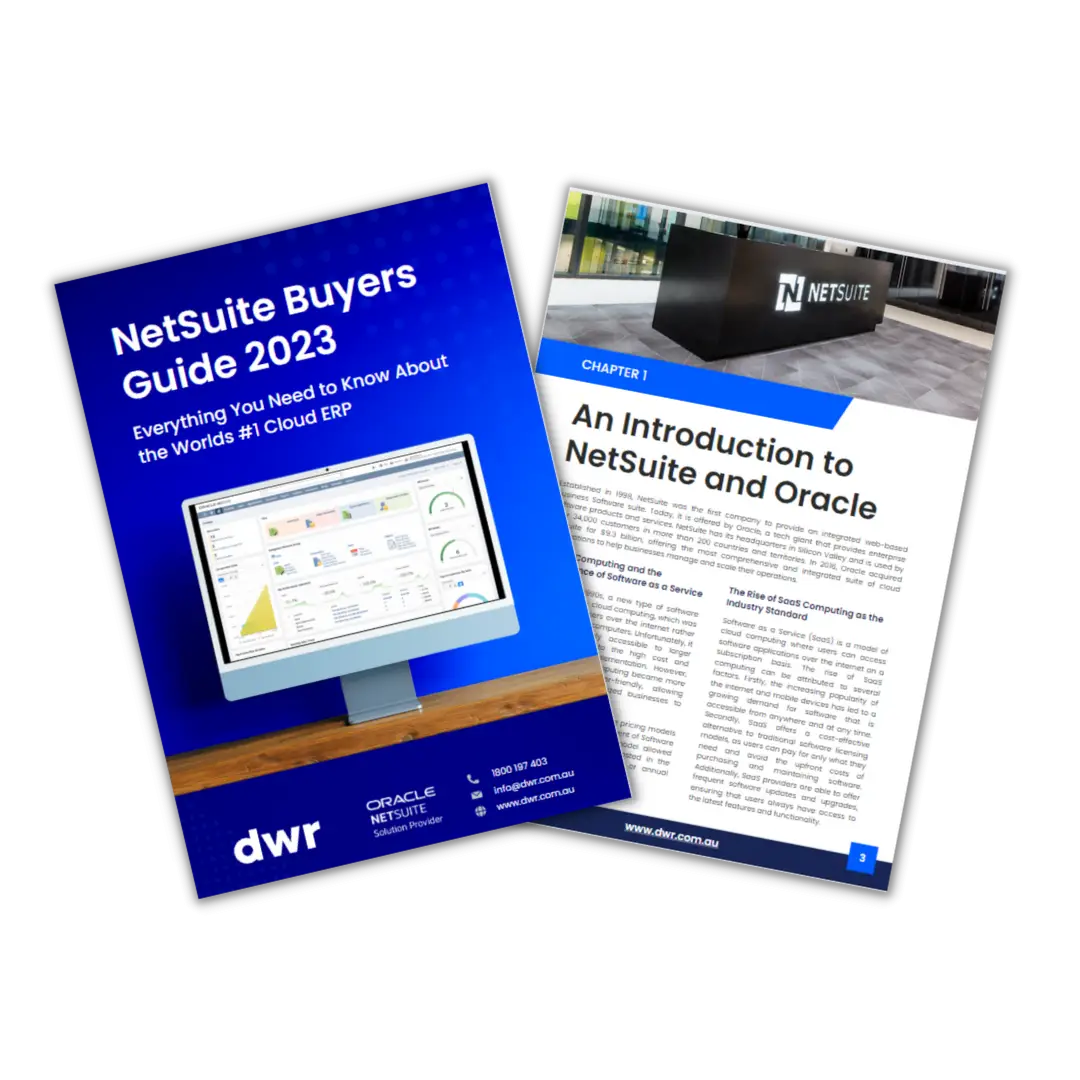
Download the Ultimate Buyers Guide to NetSuite ERP

Navigating the diverse landscape of ERP software solutions can be daunting. With the NetSuite Buyer's Guide, you'll gain access to insider knowledge that empowers you to make the best decisions for your company.

Download the Guide